HVAC Sizing and Manual J in Encino
Last updated 2026-06-13.
Direct take: Size a Trane system in Encino, CA (91316 and 91436) with a Manual J load calculation, not a square-foot rule, since oversizing by even half a ton causes short cycling and uneven rooms. Call Encino Trane HVAC at (213) 277-7557 or book online, and we run the full load before naming a tonnage.
Worth knowing
- Manual J is the standard load calc; it fixes the true BTU requirement.
- Oversize and you invite short cycling, weak dehumidification, and hot and cold spots.
- Climate Zone 9 puts Encino on a hot valley design temperature for the load.
- Equipment size has to match duct capacity, or static pressure wrecks performance.
- Here, Title-24 calls for charge and airflow verification on new split systems.
- Every install starts from a Manual J load, never a square-foot rule of thumb.
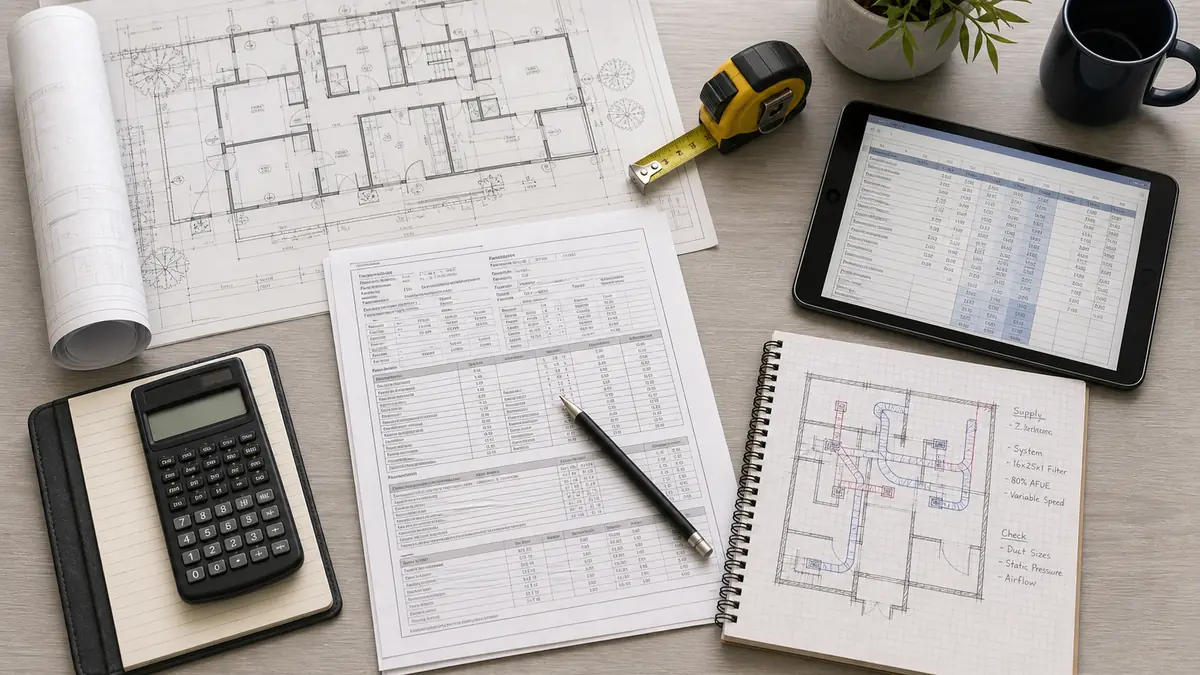
Why does correct sizing matter so much?
Sizing is the single decision that most determines whether a new system feels good or fights you for 15 years. Get it wrong on the high side, the more common error, and the AC blasts the space cold in a few minutes, hits the thermostat, and shuts off before it has run long enough to pull humidity out of the air or move conditioned air to the far rooms. That is short cycling: clammy air, uneven temperatures, more wear on the Climatuff compressor, and higher bills, all from a unit that is too powerful.
Undersizing is rarer but real: a unit that runs constantly and still cannot hold temperature on a hot afternoon. The sweet spot is a system sized to the home's actual load so it runs in long, steady cycles that dehumidify and balance the house. In Encino, where homes range from tight new builds to leaky 1960s ranches, you cannot guess that load; you have to calculate it.
What is Manual J, and what goes into it?
Manual J is the residential load calc the whole trade leans on. Rather than scale square footage by some rule-of-thumb factor, it tallies the actual heat your specific home gains and loses. In Encino the inputs that swing the number hardest are window area and orientation, since those broad west-facing estate panes soak up real afternoon heat, alongside insulation, air leakage, the ceiling height on the volume-ceiling rebuilds, and the local design temperature.
| Input | Why it matters here |
|---|---|
| Window area and orientation | West-facing estate glass drives big afternoon gains |
| Insulation and air leakage | 1960s ranches leak; tight rebuilds do not |
| Ceiling height and volume | High-ceiling great rooms add cooling load |
| Design temperature | Zone 9 valley design near the local hot extreme |
| Duct location and losses | Attic and crawlspace ducts add load |
The output is the BTU load, which we convert to tons of cooling and match to a Trane model. Two homes of identical square footage in the same Encino block can land a half-ton apart because their glazing and insulation differ. That is exactly why the square-foot shortcut fails.
How does Encino's climate shape the design load?
Encino occupies Title-24 Climate Zone 9, the south-central San Fernando Valley pressed against the Santa Monica Mountains. Those mountains wall off the cooling sea breeze, which leaves summer afternoons hot and still, July highs running 92 to 96 F and 50 to 70 days a year reaching 90 F or more. Manual J anchors its design temperature near that local extreme, sizing the system to hold your target on an ordinary hot day rather than on the rare 105 F Santa Ana spike.
That single distinction is where oversizing sneaks in. Build for the once-a-year extreme and the unit is too big across the other 360 days, short-cycling the whole season. Size instead to the design condition, accept that the system runs a touch longer on the handful of hottest afternoons, and you trade up on comfort, humidity, and equipment life.
Why must ducts and equipment be sized together?
Equipment size is only half the equation. A perfectly sized condenser still fails if the duct system cannot carry the required airflow, typically around 350 to 400 CFM per ton. Undersized trunks or leaky, crushed branch runs, common in Encino's older ranch homes, raise static pressure until the blower struggles, the furnace trips its high-limit on a four-flash code, and the evaporator coil freezes from low airflow. We measure total external static pressure and confirm the ducts can deliver the design CFM before finalizing the equipment size.
This is why a load calc and a duct evaluation go together. If the ducts are the bottleneck, the fix is sealing and resizing the runs, covered on our ductwork page, not buying a bigger unit that only worsens the static-pressure problem. The interplay between sizing and airflow is also why an oversized unit shows up as short cycling.
A worked Encino sizing example
Here is how the load actually comes together on a real home, and why the square-foot shortcut would have oversized it. Take a 2,400 square foot single-story Royal Oaks ranch, decently insulated after a re-roof, with moderate window area and attic ductwork.
The old rule of thumb says 1 ton per 400 square feet, which would call for 6 tons. A Manual J on the same house tells a different story: with the upgraded insulation, shaded north exposure on half the glass, and a tight envelope, the calculated cooling load lands near 36,000 BTU, or 3 tons. The rule of thumb would have doubled the real load. We would set a 3-ton Trane matched to the duct capacity, not a 6-ton unit that would blast the house cold in four minutes and short-cycle the rest of the day. The gap between those two numbers is the difference between a system that runs in steady, dehumidifying cycles and one that grinds its compressor and leaves the back rooms uneven for the next 15 years.
| Method | Result | Outcome |
|---|---|---|
| 1 ton / 400 sq ft rule | 6 tons | Oversized; short cycles, damp, uneven |
| Manual J load calc | ~3 tons (36,000 BTU) | Right-sized; long steady cycles |
What is the oversizing failure chain?
Putting too much tonnage on an Encino home is no minor rounding error you shrug off. One oversized condenser kicks off a cascade of trouble that dogs the house for as long as the equipment stays bolted to the pad.
- The cycle gets too short. An oversized unit satisfies the thermostat in three to five minutes, well before a full cooling cycle.
- Humidity never leaves. Latent moisture removal needs run time; a short cycle leaves the air clammy even at the set temperature.
- Rooms go uneven. The far bedrooms never get enough run time to reach temperature before the unit cuts off.
- The compressor wears. Every start draws peak current and heat; more starts per hour ages the Climatuff compressor faster.
- Bills climb. Repeated startup surges and lost efficiency cost more than a right-sized unit running longer, gentler cycles.
That last-row outcome is why an oversized condenser so often shows up as short cycling within a season or two of a botched install.
How does sizing connect to Title-24 and your install?
Inside Climate Zone 9, Title-24 wants refrigerant-charge and airflow verification on any new or replacement split system, plus HERS field verification of the duct sealing whenever you alter most ducts. Those checks exist to prove the system is moving the airflow and holding the charge your sizing assumed. We file the permit, weigh the charge in to target, confirm measured airflow, and book the HERS rater so the install is documented and lines up with the load calc. What you get is a system that truly delivers its rated capacity. Once the load is set and you are picking a tier, turn to the Trane buying guide.
Common questions about HVAC sizing in Encino
What is a Manual J load calculation?
Manual J is the trade's standard way to pin down a home's heating and cooling load. It folds in square footage, ceiling height, window area and orientation, insulation, air leakage, and the local design temperatures. Out comes the real BTU load your equipment has to meet, the honest basis for sizing and far sharper than any square-foot shortcut.
Why is bigger not better when sizing an AC?
Oversize the AC and it hits the thermostat fast, then quits before it has wrung out the humidity or evened the rooms, which is short cycling. That grinds the compressor, leaves the house damp, and breeds hot and cold spots. Size it right and it runs longer, steadier cycles that dry the air and balance the temperature, and that is what actually feels good.
How many tons does my Encino home need?
There is no honest answer without a load calc, because two same-size Encino homes can need different tonnage depending on glazing, insulation, and orientation. A common rough range for a well-insulated home is one ton per 500 to 700 square feet, but we never quote off that alone; an estate with walls of west-facing glass needs more, a tight new build less.
Does duct size matter as much as equipment size?
Yes. A correctly sized condenser is useless if the ducts cannot carry the airflow. Undersized or leaky ducts raise static pressure, trip the furnace high-limit, and freeze the coil. We size the equipment and verify the duct system can deliver the required CFM, because the two have to match for the system to reach rated capacity.
Will the right size still cool my Encino home on the hottest days?
It will. Manual J anchors on a design temperature near the local extreme, so a right-sized system holds your target through a typical hot Encino afternoon. Chase the rare 105 F Santa Ana spike with extra tonnage and you just buy short cycling the other 360 days. We size to the design condition, and that keeps you comfortable all season.
How long does a Manual J load calculation take?
For a typical Encino home, the field measurements and the calc are usually done within a single visit, and we have the tonnage and tier recommendation back to you fast. It involves walking the home to log window areas and orientation, insulation, ceiling volume, and duct location, then running those inputs against the Zone 9 design temperature. It is the step a quick square-foot guess skips, and the one that prevents an oversized system.
Can I just match the tonnage of my old unit?
We advise against it. The old unit was very often oversized at the original install, so copying its tonnage carries the same mistake forward into a new, expensive system. Encino homes also change: new windows, added insulation, or a remodel all shift the load. A fresh Manual J reflects the home as it stands today, which is why we never quote off the old nameplate.